
 by Adam Johnson
At Johnson Restoration, we’ve worked with countless homeowners and business owners to repair and rebuild after unexpected damage—whether it’s a storm-torn roof or a fire-damaged storefront. One question we hear often is: “How much will my insurance actually cover?” The answer depends heavily on two terms in your policy: Replacement Cost Value (RCV) and Actual Cash Value (ACV). These aren’t just insurance buzzwords—they determine how much money you’ll get to fix or replace what you’ve lost. Let’s break down the difference so you can make sense of your coverage and plan ahead.
What Is Replacement Cost Value (RCV)?
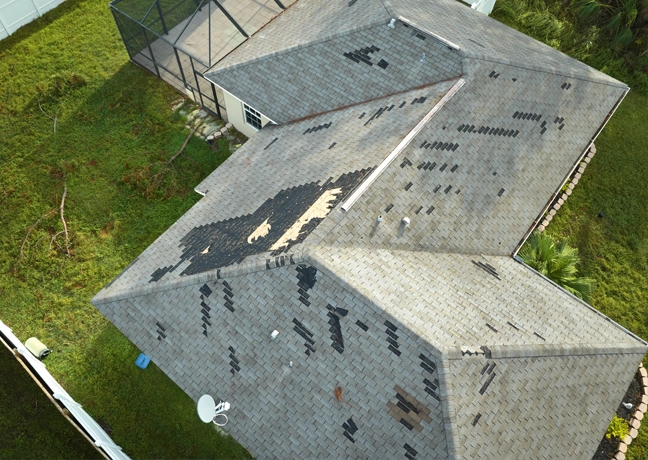
Replacement Cost Value is the amount it would take to repair or replace your damaged property with something similar, based on today’s costs—without subtracting for wear and tear. Think of it as the “good as new” option. If a hailstorm punches holes in your roof, RCV coverage would pay for a brand-new roof using current prices for materials and labor. The same goes for a commercial building: if a fire guts your office, RCV could cover rebuilding it to its pre-loss condition, even if construction costs have risen since it was built. The example we usually give to customers is this: imagine you’re driving a 2010 Ford pickup truck that gets totaled in a car accident. The insurance doesn’t buy you a brand new pickup, but instead gives you the fair market value for the vehicle at the time it was damaged – ie the value less depreciation. However, property insurance policies (at least those with RCV coverage) will pay to buy a brand new roof or siding or whatever else was damaged – even if a brand new roof is more expensive than the fair market value of the roof in its condition just before the loss.
There’s a catch, though—you usually have to replace or repair the property to get the full RCV amount. If you don’t, the insurer might only pay the ACV (more on that below) until the work is done. Policies with RCV coverage also tend to have higher premiums because they promise a bigger payout, and they often come with a coinsurance clause (at least in commercial policies this is true) requiring you to insure up to a percentage (like 80% or 90%) of the rebuild cost.
What Is Actual Cash Value (ACV)?
Actual Cash Value, on the other hand, is what your property is worth right before the damage happens, factoring in depreciation. Depreciation is the loss in value as things age—your 10-year-old roof or that outdated HVAC system in your rental property isn’t worth what it was when it was new. With ACV coverage, your payout reflects that reduced value. So, if that hailstorm hits and your aging roof needs replacing, the insurer might calculate its ACV by taking the cost of a new roof and subtracting years of wear—say, leaving you with $10,000 instead of the $20,000 a new one costs.
ACV policies typically have lower premiums because they pay out less. They’re a “cash out” option—you get the money based on the property’s current worth, and you decide what to do with it. You could replace the roof, pocket the difference, or even upgrade, but any extra cost is on you.
How Do They Compare in Real Life?
Picture this: your home’s kitchen is damaged in a fire. The cabinets, installed 15 years ago, would cost $25,000 to replace today. With RCV coverage, your insurance could pay the full $25,000 to install new cabinets (minus your deductible), as long as you replace them. With ACV, the insurer might say those old cabinets had depreciated by 60%, so they’re worth $10,000 now—leaving you with a $10,000 payout. You’d need to cover the rest if you want new cabinets, or settle for a partial fix.
For a commercial property, like a warehouse, the stakes can be higher. If a storm destroys a 20-year-old roof that costs $100,000 to replace, an RCV policy could cover that full amount. An ACV policy might cut it to $40,000 after depreciation, forcing you to dip into savings or delay repairs—something no business owner wants.
Which Is Right for You?
Choosing between RCV and ACV depends on your situation. RCV is ideal if you want to restore your home or building to its former glory without a big out-of-pocket hit—perfect for newer properties or if you rely on your building for income (like a rental or business). It’s what we at Johnson Restoration often see with clients who need full roof replacements or structural repairs after a loss. But it costs more upfront in premiums and requires insuring to a higher value to avoid coinsurance penalties (a topic we’ve covered elsewhere).
ACV might suit you if you’re okay with a smaller payout and lower premiums—say, for an older home where you’re fine with patching things up or taking the cash. It’s less about rebuilding “like new” and more about getting by with what you had.
Why It Matters to Johnson Restoration Customers
Understanding RCV versus ACV can make or break your recovery plan. When you call us to fix a damaged roof or renovate after a disaster, the payout you get shapes what we can do together. RCV coverage might mean a brand-new roof with top-tier materials, while ACV might limit us to repairs that fit a tighter budget. Either way, we’re here to work with you. Review your policy, talk to your agent about your property’s current rebuild cost, and let’s ensure your coverage matches your needs—so when the unexpected hits, you’re ready to restore with confidence.
Regardless of where you wind up with these policies and their respective coverage, it is imperative to have a qualified representative look over your loss and ensure that you are being treated fairly and correctly under the policy at issue. After all, if you had a contract with a local car dealer for a brand new car and they tried to give you a car that was several years old instead, I doubt you would hesitate to object and protect your interests. A property & casualty policy is not different – it is just a contract and you should not accept anything less than the contractual benefit you bought and paid for through your premiums. If you’ve got a loss or thinking about filing one, schedule a free inspection with Johnson Restoration and we can help you through this process.

Adam Johnson
Adam Johnson is an attorney licensed in Nebraska and is the founding member and current President of Johnson Restoration Services - a regional claim management and storm restoration contractor in Omaha. Mr. Johnson is a second generation Omaha native and is proud to serve its community with honest and ethical legal and restoration services.
Related Articles

Understanding Nebraska’s Anti-Indemnity Law: What Property Owners Need to Know When Hiring a Roofing Contractor
When a storm hits your home or business in Omaha, Nebraska, the last thing you want is a legal headache...
Read More
Policy Language vs. Laws and Regulations: What Wins?
In the realm of property insurance claims for storm-damaged siding, ensuring that insurers cover the replacement of all necessary sections—including...
Read More
New Proposed Law Threatens Contractors, Hurts Homeowners – What You Need to Know About LB1137
In the world of insurance restoration work across Nebraska, helping homeowners get fair claim settlements and direct payments isn’t just...
Read More
Leave a Comment